
A Rooftop Rig and the Cooling Bill It Has to Beat
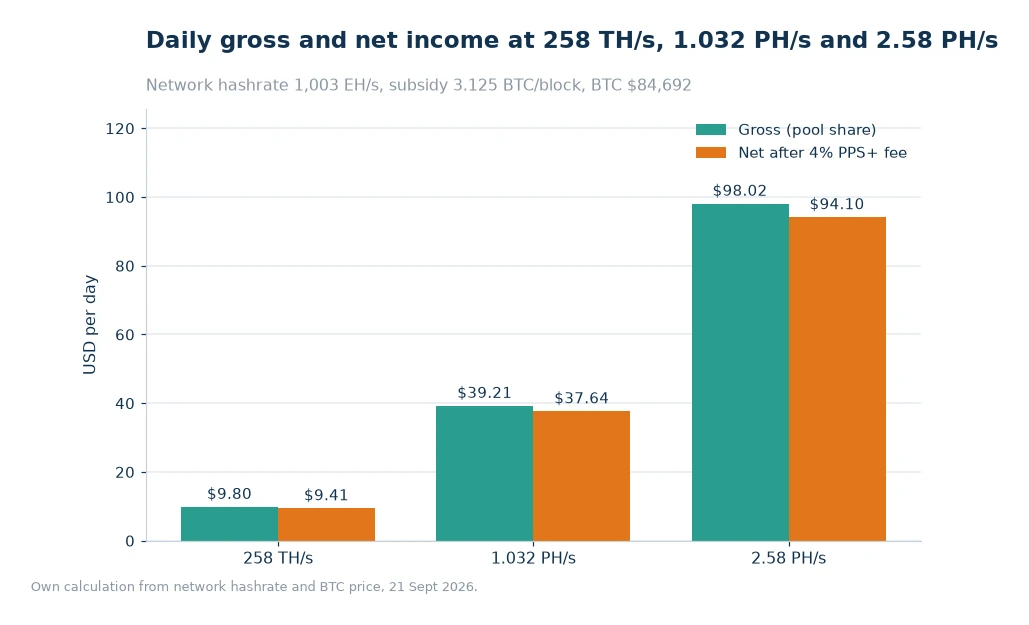
258 TH/s produces around 0.00011575 BTC a day, $9.80 at $84,692, and $9.41 net of the posted charge on the block-reward piece. On a roof, the machine's own heat becomes a second bill. A 400-watt extractor running flat out adds about $0.67 a day at seven cents a kilowatt-hour, which is small in isolation and not small at all once it runs for four months.
Key takeaways
- The machine at 258 TH/s nets $9.41 a day; cooling hardware is a separate load that eats into it.
- A 400 W blower on a hot day is 9.6 kWh, or $0.67 at $0.07 per kWh, before any air conditioning.
- Size the exhaust for the hottest week of the year, because a rig that throttles in August loses more than the fan costs.
- Recruit neighbours who already have a roof and a meter; that is where introductions actually come from.
Heat leaves the room or it stays in the coin
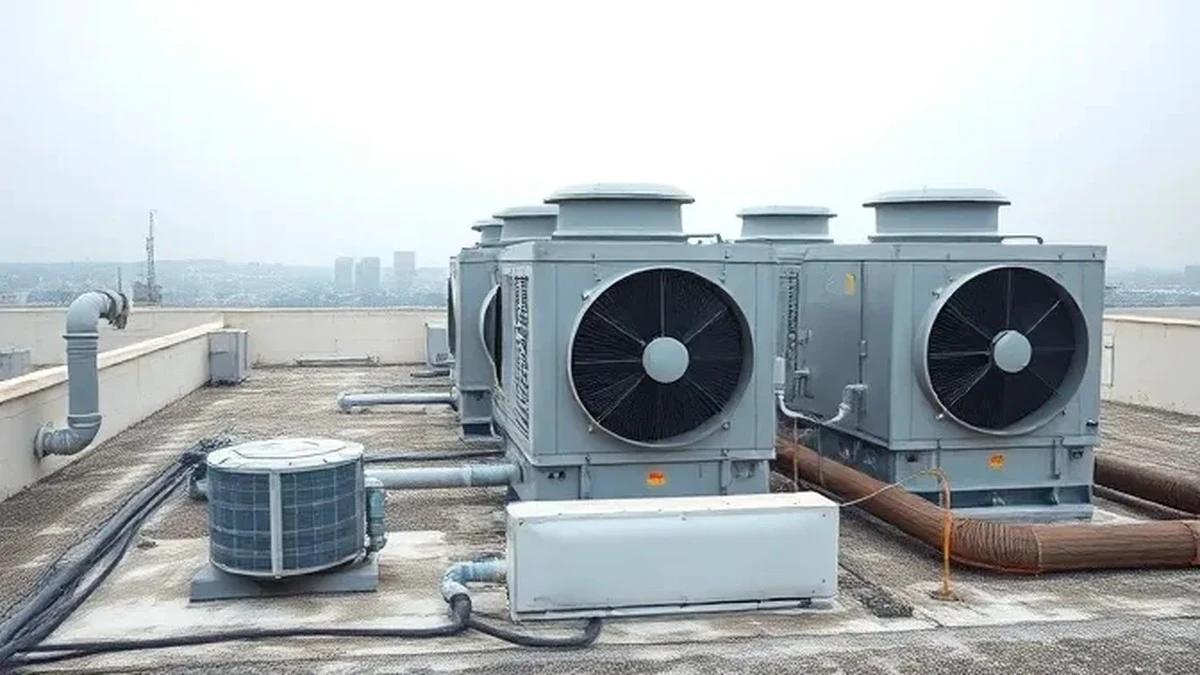
Every watt that goes into a mining machine comes out as heat, minus a rounding error. A 5 kW rig is a 5 kW heater that happens to produce coins. On a roof this is an advantage for eight months and a problem for four, because the same structure that sheds heat easily in February bakes under direct sun in July.
The practical question is not how to cool the machine but how to move air through the space without pulling in rain, dust or a neighbour's complaint. That usually means an intake louvre, a filtered path and an extractor sized above the machine's own airflow. Each of those is a cost, and each of them is invisible in a hashrate chart.
What 258 TH/s earns before the blowers
The pool side is straightforward. The gross credit at 258 TH/s is $9.80 a day, and applying the 4% posted charge to the block-reward component leaves $9.41. That figure assumes the machine is hashing for the full 24 hours, which on a roof in summer is exactly the assumption that fails first.
Thermal throttling is the mechanism. When intake air is too warm, firmware reduces frequency to protect the boards, and the hashrate falls without any error appearing. The dashboard shows a lower line rather than a red warning, so the loss is silent. On a hot afternoon a poorly ventilated unit can lose a noticeable share of its output while drawing the same power.
| Roof condition | Extractor draw | kWh per day | Cost at $0.07 | Credit remaining |
|---|---|---|---|---|
| Cool month | 120 W | 2.88 | $0.20 | $9.21 |
| Shoulder | 240 W | 5.76 | $0.40 | $9.01 |
| Hot month | 400 W | 9.60 | $0.67 | $8.74 |
Across the three rows the extractor takes between two and seven percent of the credit. That is tolerable. What is not tolerable is the fourth row that does not appear: a hot month where the extractor is undersized, the machine throttles, and the credit falls by 15% while the blower still runs at full power.
Sizing airflow to the worst week, not the average
Average July temperature is a misleading design input. Equipment decisions should be made against the hottest afternoon the roof will see, because that is when throttling starts and when the loss is largest. A fan chosen for the average will be running at maximum on the days that matter and idling on the days that do not.
There is a cost to oversizing too. A larger blower moves more air and draws more watts for the whole season, including the mild weeks when a smaller unit would have been fine. The middle path is a two-speed or variable extractor with a thermostat, which spends most of the year at low draw and only opens up during the afternoons that need it.
Why the introduction happens at the roofline
Rooftop mining is a social activity whether the owner wants it to be or not. Neighbours see the ducting, hear the fans, and ask what it is. That conversation is the natural origin of an introduction, and it is also the reason the ViaBTC Referral programme works better for this kind of operator than for someone in an industrial unit nobody visits.
The person asking is usually considering one machine of their own and has no idea what it costs to run. Answering with the net figure rather than the gross one is both honest and self-interested: a neighbour who understands the power bill will not blame you when the first invoice arrives, and will still be mining in a year.
A summer budget that survives a heatwave
Build the annual budget on three seasons rather than twelve months. Cool, shoulder and hot, with the extractor at a different draw in each. Then add one line for the two weeks a year when the roof is hottest and the machine may need to be turned down deliberately to keep temperatures inside spec.
Deliberate curtailment is cheaper than thermal damage. Losing 10% of output for ten afternoons costs about $9 at this hashrate; a board that fails from repeated overheating costs a replacement and a week of downtime. The arithmetic favours switching off early, and it favours it even more when the machine is old and the spare parts are hard to find.
Dust, rain and the maintenance calendar
A roof is a dirty environment. Filters clog, heatsinks load up, and a clogged heatsink raises temperatures at exactly the moment the ambient is highest. Put filter checks on a calendar rather than on a feeling: every two weeks in summer, monthly otherwise. A clogged filter shows up as a higher fan speed and a louder room before it shows up as lost hashrate.
Water ingress is the other seasonal risk. An intake that faces the prevailing wind will take rain sideways in a storm. A simple hood and a drip edge cost little and prevent the kind of failure that takes a machine offline for a month while a replacement board ships.
Worked example: the hot-month line
The arithmetic for a summer day, from network output down to what the roof actually keeps.
- 450 BTC ÷ 1,003,000,000 TH/s = 0.00000044865 BTC per TH/s a day.
- 258 × 0.00000044865 = 0.00011575 BTC, or $9.80 at $84,692.
- After the 4% block-reward charge: 0.00011575 × 0.96 = 0.00011112 BTC, or $9.41.
- Extractor at 400 W for 24 hours: 0.4 × 24 = 9.6 kWh.
- At $0.07 per kWh: 9.6 × 0.07 = $0.67.
- Left for the month's other costs: $9.41 − $0.67 = $8.74 a day.
- If the machine throttles 15% for six hours: 0.25 × 0.15 × 9.41 = $0.35 lost that day.
Frequently asked questions
What does rooftop cooling add to the bill?
A 400 W extractor running continuously uses 9.6 kWh a day, which is $0.67 at seven cents per kWh, or about seven percent of the $9.41 net credit at 258 TH/s.
Does heat actually reduce what I earn?
It can. Warm intake air pushes firmware into thermal throttling, which lowers hashrate silently, so a hot afternoon can cut output by a visible margin while the machine still draws full power.
Should the exhaust be sized for the average summer day?
No. Size it for the hottest afternoon the roof will see, because that is when throttling begins; a thermostat or two-speed fan keeps the mild weeks cheap without sacrificing the peak.
Measure the roof before you add a machine
Put a thermometer where the intake air enters and log it for a week in the hottest month you can. If the reading stays close to ambient, the existing airflow is adequate and another unit is a power question rather than a cooling one. If it climbs ten degrees above ambient by mid-afternoon, fix the airflow first. The Profit Calculator and the Mining Farms listing both assume the machine is running at spec, and on a roof that assumption is the one you have to earn.
Sources: ViaBTC referral, calculator and farms pages, with chain data read 21 Sept 2026 — network hashrate 1,003 EH/s, difficulty 132.76 T, 3.125 BTC per block, 144 blocks a day, BTC $84,692. Extractor wattages and the seven-cent tariff are illustrative. Published 24 Oct 2026[1].